
Vietnamese film Mansion of Mr. Hua, co-produced by Runup Vietnam and Hive Media (Courtesy of Runup Vietnam)
Vietnam and Indonesia's "Two-Track" Success
Phase Three of Korean Cinema's Southeast Asia Strategy
July 13, 2026
By Kwak Myung-dong (MyDaily Reporter)

A ‘fully localized’ co-production model in Vietnam… Mansion of Mr. Hua tops the local box office
Exclusive partnership with an Indonesian master director… Ghost in the Cell drives box office success and global IP diversification
Practical policy support is urgently needed to establish a sustainable ‘co-production system’
Korean cinema's strategy for expanding into the Southeast Asian market is evolving. In the past, collaborations were largely one-way, centering on localizing Korean IP—primarily through remakes—or providing technical support from Korean production crews. More recently, however, the industry has shifted toward two-way partnerships, with Korean and local companies jointly discovering compelling stories and collaborating throughout the entire process of development, production, and investment.
Among these developments, a "two-track" strategy has emerged as a key focus. It combines establishing local subsidiaries to fully localize projects from development through production with forming exclusive partnerships with leading local directors. A prime example of the former is Mansion of Mr. Hua, which topped the Vietnamese box office after its release. The latter is exemplified by Ghost in the Cell, which attracted widespread attention not only in Indonesia but also internationally. Building on this strategy, the Korean film industry aims to establish close co-production partnerships across Southeast Asia and use the IP created through these collaborations as a springboard to the global market.


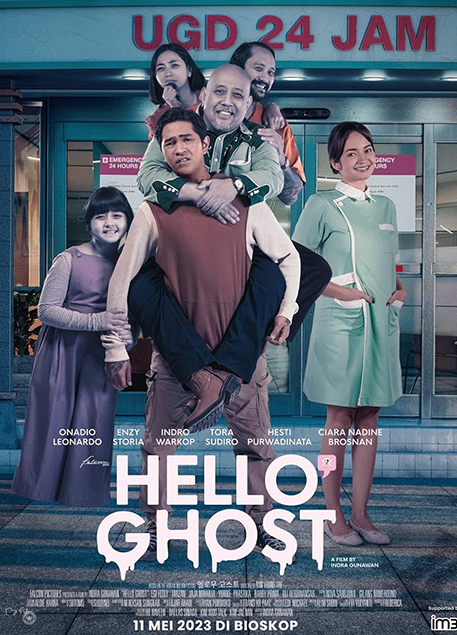
Mansion of Mr. Hua (left) exemplifies a fully localized production model, while Ghost in the Cell (right) was produced in partnership with a leading local director. (Courtesy of Runup Vietnam and Come and See Pictures))
Mansion of Mr. Hua
A Distinctly Vietnamese Found Footage Horror Film
Released in August last year, Leaving Mom topped the Vietnamese box office. The film follows a struggling barber who attempts to entrust his mother to his Korean half-brother. It was co-produced by Motive Pictures, the studio behind The Great Battle (2018), and SATE (Sidus And Teu Entertainment), led by CEO Choi Yuno, the former head of CJ ENM Vietnam's film production team. Director Mo Hong-jin wrote and directed the film, and the production credits featured nearly equal numbers of Korean and Vietnamese crew members. At the time, many Vietnamese film professionals remarked that "the moment the film began, it immediately felt unmistakably Korean," reflecting its strong Korean creative identity.
By contrast, Mansion of Mr. Hua, released this past June, contains virtually no Korean creative influence. The story follows a group of livestreamers who illegally enter the abandoned Hua Mansion in search of online views, only to become trapped by supernatural forces unleashed by restless spirits, turning their broadcast into a terrifying record of horror. Inspired by the real-life historic Hua Mansion in Ho Chi Minh City and local urban legends, the film reached No. 1 at the Vietnamese box office just six days after its release. Co-produced by Runup Vietnam, the Vietnamese subsidiary of Runup Company, and Hive Media Corp.—best known for Inside Men (2015) and 12.12: The Day (2023)— Mansion of Mr. Hua is regarded as a model case demonstrating the importance of thorough content localization.
Vietnamese filmmakers led virtually every stage of production, from screenplay development and production to directing and acting, while the Korean side played a supporting role. This locally driven production model proved to be a key factor in the film's commercial success. The film also received praise for minimizing conventional jump scares and loud sound effects, instead building tension through the unsettling atmosphere created by space and silence. Local media further applauded the film for successfully combining the found footage genre—presented as though it were real footage accidentally discovered—with traditional Vietnamese themes and folklore.
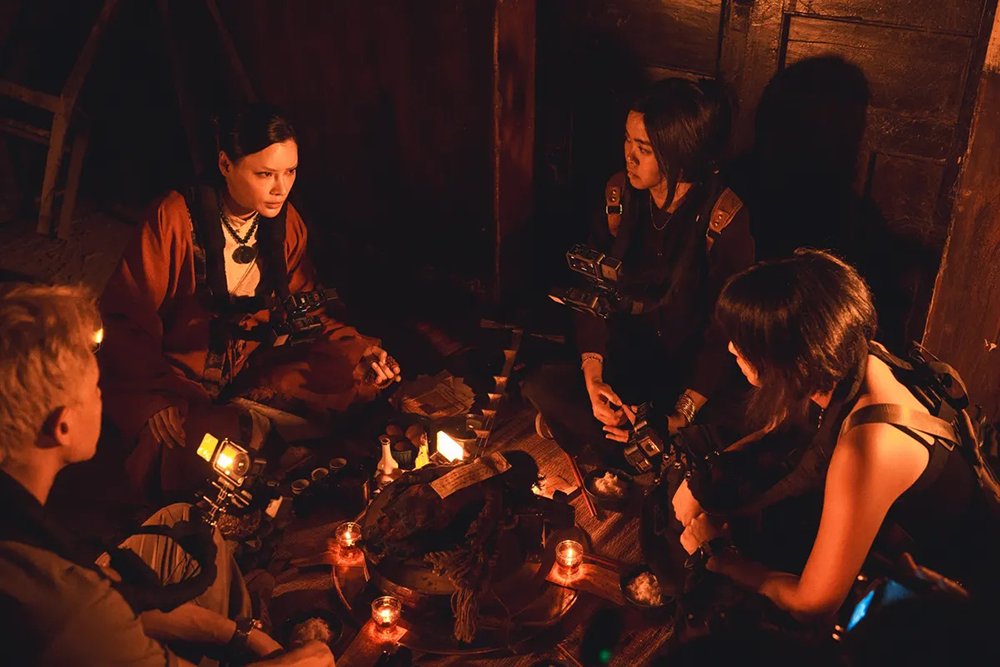
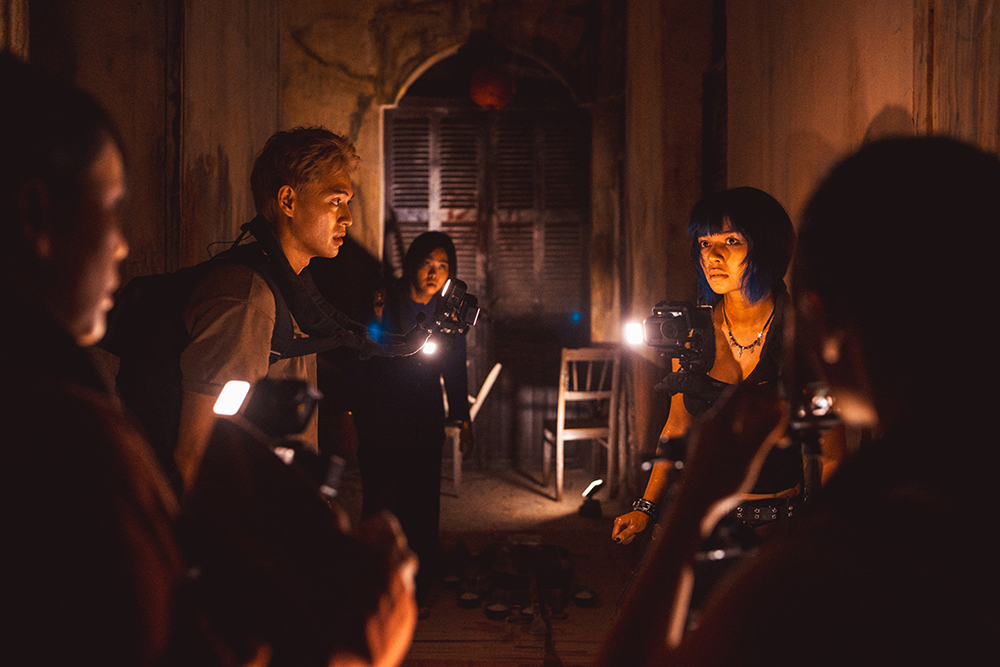
Mansion of Mr. Hua, a co-production led by a Vietnamese creative team, became a box office hit with
its found footage format—a rarity in Vietnamese cinema.
(Courtesy of Runup Vietnam)
Lee Jin-sung, CEO of Runup Vietnam, said, "Vietnam's film market is growing so rapidly that box office trends shift just as quickly. The key is responding immediately to changing audience preferences. Forecasts and strategies based on historical data have little value. Success depends on understanding market conditions in real time and adapting accordingly."
Kim Won-guk, CEO of Hive Media Corp., the film's co-production partner, shared a similar view. "Runup Vietnam, with its deep understanding of local culture, led the discovery of authentic ghost stories, casting, and local marketing, while we contributed our expertise in planning and production and took responsibility for financing," he said. "The project succeeded because we fully respected each other's expertise and maintained close communication throughout every stage of production."
Emotional resonance also contributed to the film's success. Korea and Vietnam share important cultural commonalities, including family-centered storytelling, a strong sense of justice in which good ultimately triumphs over evil, and the historical experience of war and national division. These shared experiences make audiences in both countries particularly receptive to narratives shaped by han—the Korean concept of deep-seated sorrow, longing, and resilience. Although Mansion of Mr. Hua is presented as a horror film, its underlying themes of human desire, moral consequence, and family resonated with audiences and helped drive its commercial success.
CEO Kim added, "This success has given us a strong foundation for collaborating with overseas partners. We are currently in post-production on our second film with Runup Vietnam. Beyond Vietnam, we are also preparing a range of co-financing and co-production projects targeting broader Asian markets as well as English-speaking territories. Our goal is to develop new collaboration models tailored to the cultural characteristics of each market."

Mansion of Mr. Hua's box office success was driven by its quick response to emerging trends and real-time adaptation to market conditions.
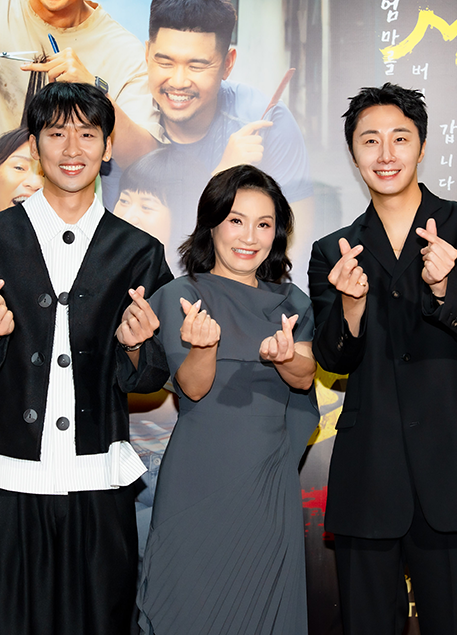
Pictured is a stage greeting for the film. (Courtesy of the Mansion of Mr. Hua Facebook page)
Phi Phong and MAXO
Success Built on Understanding Vietnamese Social Trends
CJ HK Entertainment, CJ ENM's Vietnamese subsidiary, which entered the Vietnamese market in 2011, has established itself as a major force in the country's film industry. By focusing on discovering compelling stories and producing high-quality local films, the company has achieved a string of commercial successes, including The House of No Man (2023), which became Vietnam's highest-grossing film at the time; Mai (2024), which set a new all-time box office record; and The Ancestral Home (2025), which debuted at No. 7 on Vietnam's all-time box office chart. Most notably, Phi Phong: The Blood Demon, a horror film based on the legendary Vietnamese vampire Phi Phong and co-produced with local studio Bluebells Studio, was released last April and became the highest-grossing Vietnamese horror film of all time. Set in contemporary Vietnam, the film follows a brother-and-sister pair of shamans who travel to a remote mountain village in the country's northwest to save their dying mother, only to become entangled in a series of brutal murders linked to the legendary vampire. The film resonated strongly with Vietnamese audiences.
Another major success was MAXO: Forbidden Ritual, developed in collaboration with local production company 856 Pictures from the initial concept through project development. The film became the third highest-grossing Vietnamese horror film in history. It follows an impoverished couple who, in an attempt to save their unborn child, perform a forbidden ritual at the instruction of a shaman, transforming the spirit of the deceased mother-in-law into the guardian deity of their home—only to encounter a series of inexplicable horrors. Even before its release, the project was developed with potential remakes and franchise expansion in mind for markets including Korea, the United States, Japan, Thailand, and Indonesia.
Justin Kim, CEO of CJ HK Entertainment, said, "We developed films with the strongest emotional appeal for local audiences by combining two key sources of insight: audience demand keywords derived from the database we have built through producing a wide variety of films, and social trend keywords accumulated through distributing and marketing hundreds of titles in Vietnam." He added, "Once a project is selected, we systematically refine the story through a structured, step-by-step development process. By continuously organizing ideas, incorporating feedback, and refining the narrative at every stage, we are able to create films that resonate strongly with local audiences."

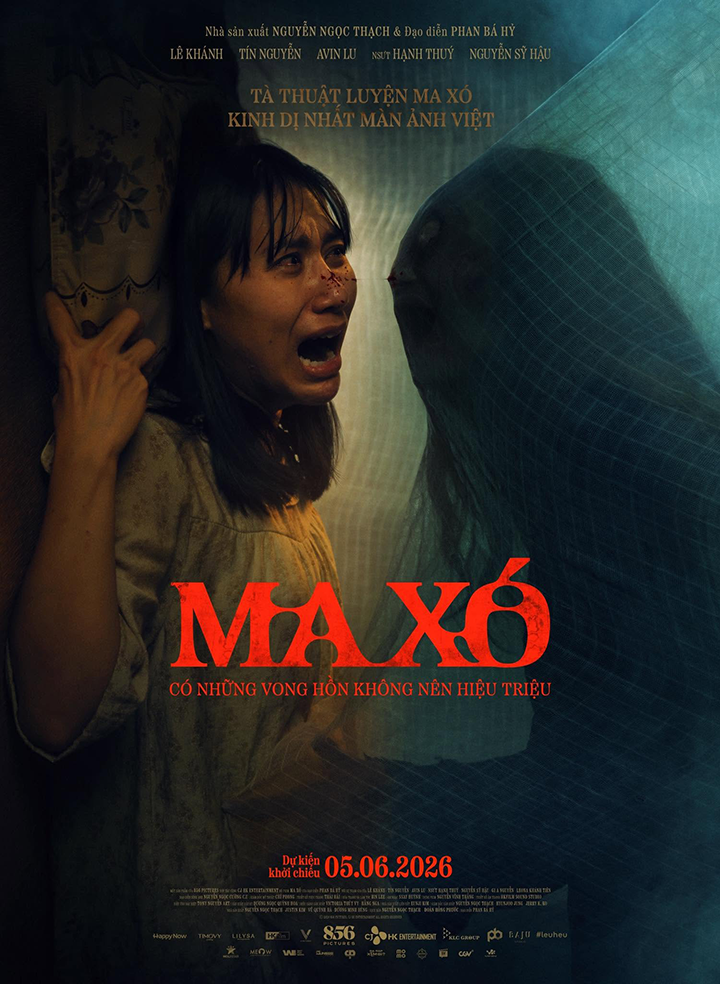
Phi Phong (left), the highest-grossing Vietnamese horror film of all time, and MAXO (right),
the third highest-grossing.
(Courtesy of CJ HK Entertainment)
Enhancing the Commercial Potential of Vietnamese Cinema
Over the past decade, film collaboration between Korea and Vietnam has evolved through distinct stages. If the first stage was marked by the successful Vietnamese remakes of Sunny (2011) and Miss Granny (2014), and the second by the box office success of Leaving Mom—which combined Korean production expertise with Vietnamese stories and talent—the industry has now entered a third stage. In this phase, Vietnamese films backed by Korean investment and production partnerships are achieving consecutive box office successes in the domestic market.
Vietnamese film critic Le Hong Lam commented, "Mansion of Mr. Hua, Phi Phong, and MAXO, all recent box office hits, demonstrate that film collaboration between our two countries has reached a far more balanced and mature stage. These films are not simply adaptations of Korean content. They are fundamentally Vietnamese in their stories, characters, and cultural identity, while effectively drawing on Korean expertise in production, planning, and market strategy."
He also spoke positively about the expansion of Korean film companies into Vietnam. "Korean companies have helped raise professional standards across the industry—from film production and project development to marketing and theatrical distribution—by introducing more systematic production processes," he said. "They have not only fostered collaboration between Korean and Vietnamese filmmakers but have also played an important role in developing local filmmaking talent." He continued, "Korean investment has strengthened confidence in the commercial potential of Vietnamese cinema. As a result, we are seeing an increasing number of ambitious projects with higher production values and broader market aspirations."
Looking ahead, Le expressed optimism about the future of bilateral collaboration. "The next step should be true co-productions, with both sides jointly developing original stories, sharing creative leadership, and producing films that preserve the cultural authenticity of each country while remaining competitive in the international market," he said. "As cultural exchange between Korea and Vietnam continues to expand, film collaboration between the two countries will become even more diverse and dynamic."
Thorough Preparation Essential to Navigate Vietnam’s Stringent Regulations
Thanks in part to collaborations with Korea, Vietnam's film market is experiencing remarkable growth. It is one of the few film markets in the world to have recorded sustained year-on-year growth since the COVID-19 pandemic. As recently as 2020, 2 million admissions were considered the benchmark for a major box office hit. Just five years later, in 2025, the market had grown so rapidly that a single film attracted 8 million moviegoers.
However, Lee Jin-sung, CEO of Runup Vietnam, cautioned against entering the market based solely on its promising outlook. "Many Korean production companies seek to collaborate with Vietnamese partners, but few projects actually make it into production because they approach the market exclusively from a Korean perspective," he said. "Any strategy that treats Korea as the primary market and Vietnam as secondary is bound to fail. Companies need to establish a local presence at least one or two years in advance and proactively develop a deep understanding of the market and local sensibilities."

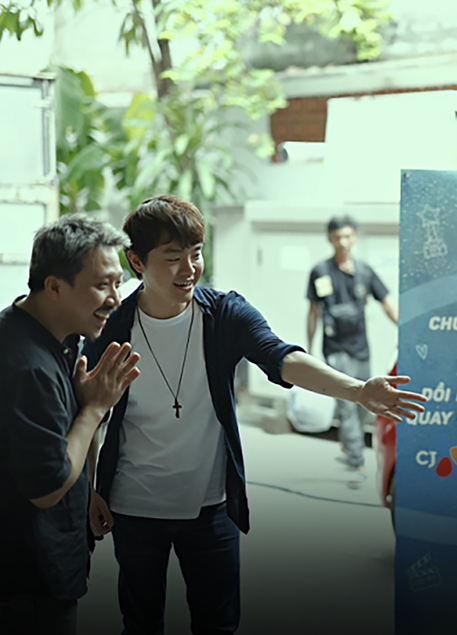
Korean and Vietnamese cast and crew gather for the traditional start-of-production ceremony on the first day of filming for Mansion of Mr. Hua.
(Courtesy of the Mansion of Mr. Hua Facebook page)
Overcoming Vietnam's legal framework and censorship system—both of which differ significantly from Korea's—is another major challenge. Kim Won-guk of Hive Media explained, "Naturally, there are risks and practical challenges arising from differences in legal regulations, settlement procedures, and on-set production practices. We overcame these by maintaining close communication with Runup Vietnam, which has the deepest understanding of the local market. Rather than insisting on Korean methods, we trusted our local partner's expertise and followed its guidance, and that made all the difference."
Vietnam's rigorous content review system and the complexity of its foreign investment regulations also present significant hurdles. Choi Yuno, CEO of SATE, noted, "Vietnam has very strict government guidelines and censorship standards for cultural content, and the detailed criteria can change over time. As a result, careful risk management is essential from the planning and screenplay stages. Many subjects and storylines that are perfectly acceptable in Korea are considered unsuitable for production in Vietnam from the outset."
The process of bringing foreign investment into the country and repatriating returns is equally challenging. For companies planning long-term operations, establishing a local joint venture is generally the most effective approach. Otherwise, foreign investors must enter into a Business Cooperation Contract (BCC) with a local partner and obtain an Investment Registration Certificate (IRC) through that agreement before they can be officially recognized as legal investors in Vietnam.
Choi added, "This process is highly complex and cumbersome, making it difficult for foreign investors to make timely investment decisions. In particular, the BCC framework was designed primarily for large-scale projects. As a result, for small- and mid-budget films, capital recovery and financial settlement can take considerable time, creating a significant barrier."
Ghost in the Cell
An Exclusive Partnership with One of Indonesia's Leading Directors
Alongside Vietnam, Indonesia's film industry is also experiencing remarkable growth. With annual cinema admissions exceeding 120 million, Indonesia is Southeast Asia's largest theatrical market. Every week, three to four new domestic horror and comedy films compete alongside animated features and global blockbusters, making the battle for audience attention and screen allocation exceptionally fierce.
In this dynamic market, Barunson E&A—the production company behind the Academy Award-winning Parasite (2019)—has reached a new milestone. Ghost in the Cell, a genre film co-produced by Barunson E&A and Indonesian filmmaker Joko Anwar's production company, Come and See Pictures, with Barunson also handling international sales, attracted more than 3.36 million admissions in Indonesia following its April 16 release (according to official figures announced in early June). Earlier, in February, the film had its world premiere at the Berlin International Film Festival, where it received critical acclaim, and was pre-sold to distributors in 148 countries, demonstrating its strong international appeal.
The film blends two genres into a single narrative. Set in Indonesia's most notorious prison, it depicts a brutal environment where rival gangs prey on one another and corrupt prison guards rule through violence. One day, an unidentified supernatural entity begins slaughtering inmates one by one, plunging the prison into chaos. Choi Yoon-hee, CEO of Barunson E&A, explained, "What makes the film unique is the irony of prisoners with vastly different backgrounds being forced to sing, dance, and meditate in order to survive an unknown entity, while former enemies must work together to stay alive. The constant interplay between graphic horror and black comedy keeps the tension high and the entertainment value strong throughout the film."
Choi had followed director Joko Anwar's career since her time at CJ ENM. While overseeing the international sales of his films—including A Copy of My Mind (2015), Satan's Slaves (2017), and Impetigore (2019)—she closely observed the Indonesian film industry and developed a deep appreciation for his filmmaking. Seeing Satan's Slaves attract 4.2 million moviegoers in Indonesia convinced her that Indonesian content had the potential to resonate well beyond its domestic market. Believing Joko Anwar to be an ideal long-term creative partner—one who consistently experiments with new ideas while maintaining a distinctive artistic voice and strong thematic vision—Barunson E&A entered into a two-year exclusive partnership with the acclaimed director.


Ghost in the Cell drew audiences with acclaimed director Joko Anwar and its unique blend of graphic horror and black comedy.
(Courtesy of Come and See Pictures)
Building a Diversified IP Ecosystem Across Indonesia and Southeast Asia
In addition to its partnership with Come and See Pictures, Barunson E&A has leveraged the international business expertise and industry know-how it gained through Parasite to build a strong network of partnerships with leading Indonesian production companies, including Visinema Pictures, Base Entertainment, and Rapi Films.
Building on this network, Barunson's strategy extends well beyond co-producing individual films. The company aims to expand intellectual property (IP) across multiple formats and platforms for the global market. It is currently pursuing remake rights to several Indonesian box office hits with production company Imajinari, including Agak Laen (2024), Agak Laen 2: Menyala Pantiku! (2025), and Tinggal Meninggal (2025). Barunson is also collaborating with Studio N to localize popular Korean webtoon and web novel IPs for Southeast Asian audiences. Choi Yoon-hee, CEO of Barunson E&A, said, "We are building a framework that allows strong IP to continuously evolve beyond the boundaries of country, language, and format, taking on new forms as remake films, television series, webtoons, dramas, and more."
CJ HK Entertainment is pursuing a similar strategy of IP diversification. In particular, MAXO, a psychological supernatural horror film inspired by Vietnamese folk beliefs and shamanistic rituals, is being developed as a franchise modeled on successful Hollywood horror series, with plans to build a shared universe across multiple markets. The project is attracting attention as a new model for discovering compelling Southeast Asian folklore-based IP and bringing it to the global entertainment market.
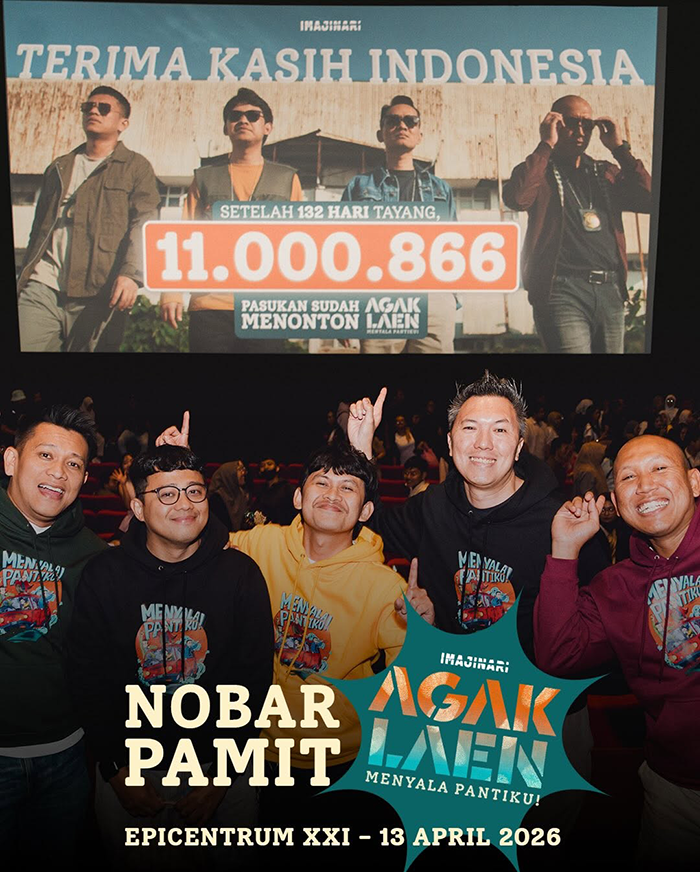
The cast and filmmakers at the closing thank-you event for Agak Laen 2, which drew a record-breaking 11,000,866 admissions
to become the highest-grossing film in Indonesian box office history. (Courtesy of the Imajinari Facebook page)
Practical Support Needed to Build a Sustainable Collaboration Framework
Korean production companies agree that if collaboration with Southeast Asia is to evolve into a sustainable, long-term partnership rather than a series of one-off projects, more substantial government support is urgently needed.
Kim Won-guk, CEO of Hive Media Corp., proposed, "We hope to see a significant expansion of practical support measures, including tax incentives for international co-productions, simplified administrative procedures for overseas investment, government subsidies for overseas filming and technical collaboration, and enhanced translation and interpretation services."
Choi Yuno, CEO of SATE, likewise emphasized the need for institutional support rather than direct financial assistance. "More than simple cash grants, what we urgently need is a permanent local business support desk that can connect Korean companies with local production partners and professionals in investment, distribution, legal affairs, taxation, and accounting," he said, stressing the importance of support in areas that individual companies struggle to manage on their own. He added, "It would also be extremely beneficial for both governments to promote co-productions through bilateral film co-production agreements and establish regular talent development programs for filmmakers from both countries."
The Korean Film Council (KOFIC) is also paying close attention to the rapidly evolving nature of collaboration between Korea and Southeast Asia. Kim Young-goo, Head of KOFIC's International Affairs Team, commented, "Mansion of Mr. Hua is a remarkable achievement. In a Vietnamese market largely dominated by major corporations, Runup Vietnam—the Vietnamese subsidiary of the Korean SME Runup Company—built a local production network, talent base, and distribution channels through sustained effort. By internalizing the entire process from development and production to distribution, rather than simply making an equity investment, the project demonstrated that even smaller production companies can successfully transplant the Korean production system overseas."
He also praised Ghost in the Cell as "an ideal model that combines the artistic vision of Indonesia's leading filmmaker, Joko Anwar, with Korea's veteran expertise in international film sales." "Leveraging the director's global reputation, recognition at international film festivals, and strong local fan base helped lower the barriers to entering the market," he said. "The project also demonstrated how relatively modest investment can maximize both production quality and public attention."
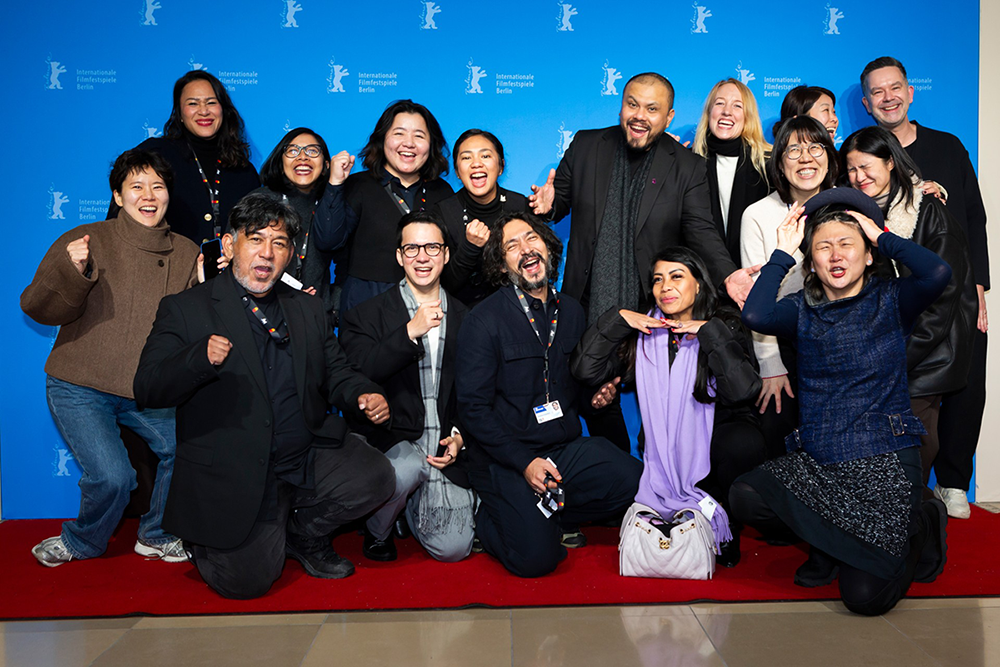
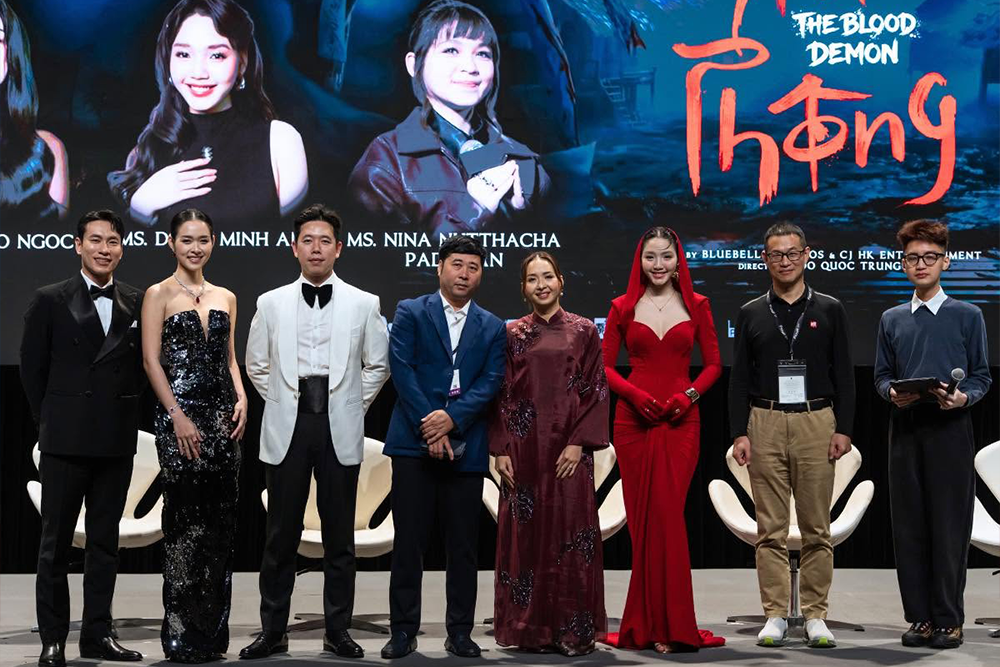
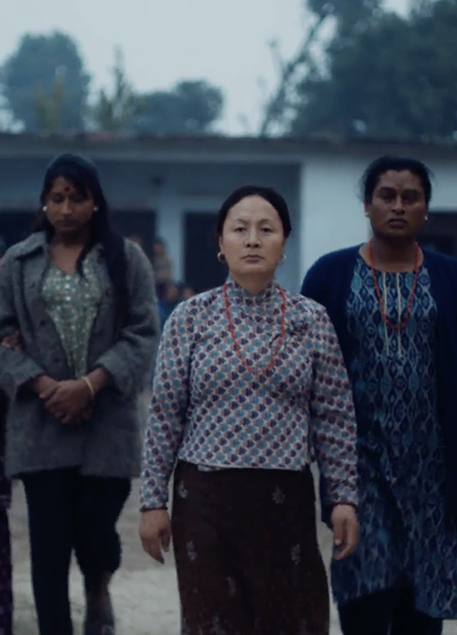
Ghost in the Cell (top), invited to this year's Berlin International Film Festival, and Phi Phong, showcased globally at Hong Kong FILMART. International co-productions from Southeast Asia are attracting growing attention from audiences and industry professionals worldwide.
(Courtesy of the Berlin Film Festival website and the CJ HK Entertainment Facebook page)
As Korean production companies continue to achieve notable success in Southeast Asia, KOFIC plans to strengthen its support for international collaboration. Beginning this year, KOFIC launched its International Co-production Pilot Program, which provides up to KRW 500 million in production funding per selected project. During the program's first application round, 19 projects were submitted, including six co-productions with Indonesia and a total of 11 projects involving collaboration with Southeast Asian countries. These figures suggest that the production of localized films for Southeast Asian markets has entered a phase of sustained growth.
KOFIC is also pursuing a range of initiatives to strengthen regional collaboration. These include establishing a Co-distribution Fund among member countries of the Asian Film Alliance Network (AFAN)—Korea, Indonesia, the Philippines, Malaysia, Singapore, Mongolia, Taiwan, and Thailand—supporting participation in the market section of Indonesia's Jogja-NETPAC Asian Film Festival (JAFF), and organizing Korean film festivals and special screenings in partnership with Korean Cultural Centers overseas and local Southeast Asian film festivals.
Looking ahead to next year, KOFIC plans to introduce a new International Co-production Project Development Support Program to help reduce the financial risks associated with the early-stage development of Korean IP for overseas markets while enabling Korean companies to retain greater ownership of their intellectual property. It also intends to revive the Foreign Audiovisual Production Location Incentive Program, which had previously been suspended, to attract more international productions—particularly from rapidly growing markets such as Southeast Asia—to shoot in Korea. Together, these initiatives form part of a broader, more comprehensive support strategy.
Kim Young-goo, Head of KOFIC's International Affairs Team, said, "The key lies in combining Korea's strengths in planning and investment with Southeast Asia's dynamic creative energy to jointly develop and own intellectual property while simultaneously targeting global streaming platforms and neighboring markets." He added, "Building a multinational co-production hub centered on shared IP and creative talent will be the next major step in the global expansion of the Korean film industry."