
Kim Dong-ho, Honorary Festival Director of the Malaysia International Film Festival,
and director Lee Chang-dong walk the closing ceremony red carpet together.
Exploring the Identity of Southeast Asian Cinema
A Visit to the 2026 Malaysia International Film Festival
August 10, 2026
By Han Sun-hee
(Producer, Mr. Kim Goes to the Cinema)
Photos courtesy of the Malaysia
International Film Festival

Toward an ASEAN Cinema Hub: A Visit to the 9th Malaysia International Film Festival
A Celebration of Multiculturalism and Deepening Ties with Korean Cinema
Lifetime Achievement Award and Masterclass: “The World of Lee Chang-dong” Captivates Malaysian Audiences
The Malaysia International Film Festival (MIFFest), now in its ninth edition, was held from July 18 to 25 at the GSC MyTOWN multiplex in downtown Kuala Lumpur. The winners of the festival’s competition sections were announced at the Malaysia Golden Global Awards (MGGA), which also served as the festival’s closing ceremony.
The Malaysian film industry has been growing rapidly in recent years. Last year in particular, the strong performance of homegrown live-action and animated films marked a major leap forward for the industry in both scale and quality. Recognizing the potential of local content, the Malaysian government has been expanding support for the screen industry, including through new incentive programs. Korean films have also been warmly received in the Malaysian market, with around 18 to 19 Korean titles released annually in recent years. Last year, films across a wide range of genres, from comedy to occult horror, drew audiences, including My Daughter Is a Zombie (2025) and Dark Nuns (2025). This year, director Yeon Sang-ho’s The Colony quickly became the highest-grossing Korean film of all time at the Malaysian box office. Opportunities for international co-productions between Malaysia and Korea are also steadily expanding. Against this backdrop, the ninth MIFFest drew considerable attention from local film professionals and audiences by presenting director Lee Chang-dong with a Lifetime Achievement Award and inviting him to give a masterclass.

The Opening Ceremony of the 9th Malaysia
International Film Festival
Ties That Began with the Busan International Film Festival
The Malaysia International Film Festival was first held in February 2017. Joanne Goh, founder of event management company Jazzy Group, came to Korea with the ambition of launching a new film festival in Malaysia, which at the time had no international film festival of its own. Through Kim Ji-seok, then Senior Programmer of the Busan International Film Festival, Goh met Kim Dong-ho, former Chairman of the Busan International Film Festival, and sought his advice. Kim Ji-seok, who had discovered and generously supported emerging Malaysian filmmakers, has since passed away, but Kim Dong-ho has remained involved with MIFFest as its Honorary Festival Director since 2017. Through Kim Dong-ho’s extensive network, the festival has been able to invite internationally renowned film figures over the years, including Hirokazu Koreeda and Christine Hakim.
By introducing a competition section and awards ceremony and placing greater emphasis on promoting cinema from the ASEAN region, MIFFest has steadily built its foundation through programming and events designed to be more entertaining and accessible to general audiences. The festival has also sought to earn the support of Malaysia’s filmmaking community by providing rare opportunities to see international arthouse and independent films in theaters. Its decision to revisit the cinematic world of director Lee Chang-dong—who became widely known among Malaysian filmmakers and audiences through Burning (2018)—by screening his earlier works Peppermint Candy (2000) and Oasis (2002) reflects these efforts. In announcing his Lifetime Achievement Award, the festival described Lee as “a filmmaker whose works continue to resonate across cultures and generations through their honesty, compassion, and profound understanding of humanity.”
With “Resonance” as its theme, this year’s MIFFest invited 65 films from 35 countries. The opening film was BAGA: Tomorrow Belongs To No One, the latest production from Skop Productions, one of Malaysia’s leading producers of box-office hits. Set in a fishing village in eastern Malaysia, the crime romance drama follows a young couple who become entangled in an unexpected secret deal.
Although MIFFest presents a relatively modest number of invited films compared with other international film festivals, it divides its program into a number of sections to introduce young Malaysian audiences to a diverse range of films from both the past and present. At the heart of the festival is its competition section, which featured 10 new films by directors from around the world who had made fewer than three feature films, selected by preliminary jurors from across Asia. In the preliminary round, the jurors voted to select nominees in categories including Best Film, Best Director, Best Screenplay, Best Cinematography, Best Supporting Actor and Actress, Best Actor and Actress, and the New Hope Award.
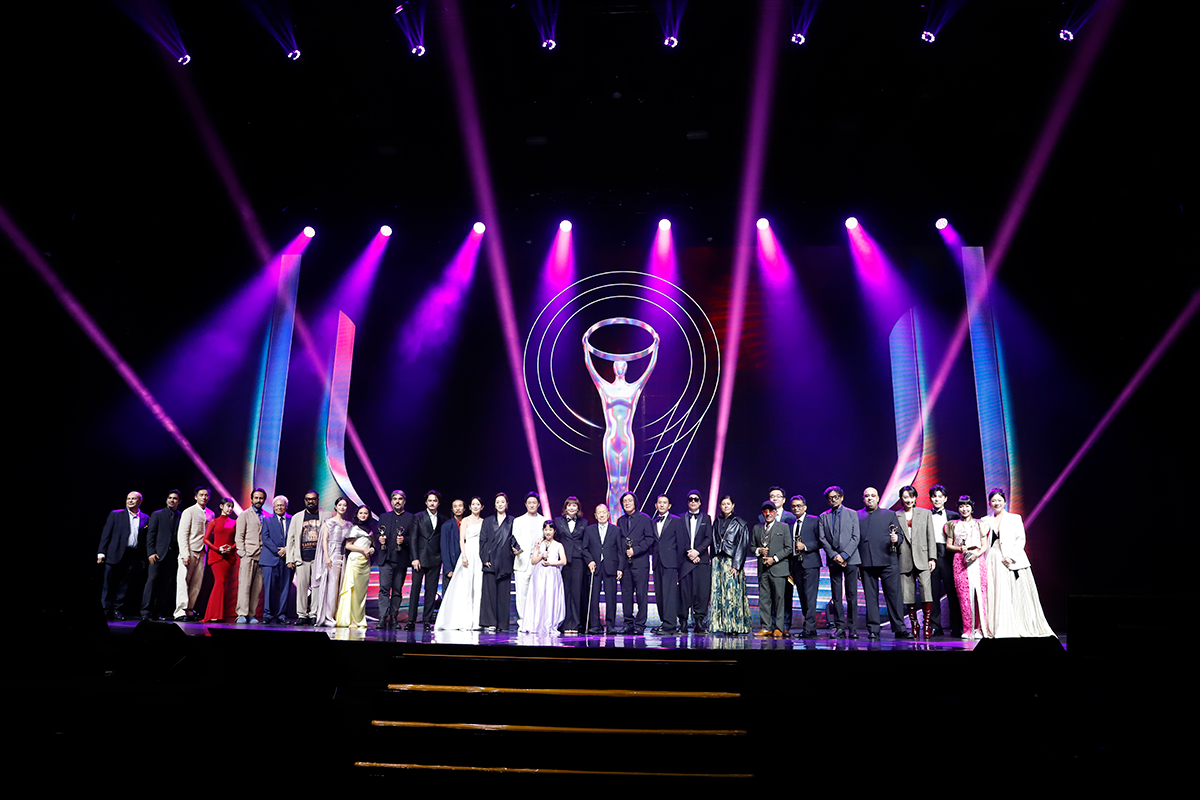
Award winners pose for a commemorative photo onstage
at the Malaysia Golden Global Awards.
Programming That Reflects a Multiethnic, Multicultural Society
With its population comprising several major ethnic groups, including Malays, Chinese, and Tamils, Malaysia is one of Southeast Asia’s most multicultural countries. This diversity is equally evident in its film and screen industries, where Malay, Chinese-language, and Tamil Indian films are produced and screened side by side. The festival’s programming appears to have been carefully designed to reflect this diversity in both Malaysian audiences and the country’s cultural landscape. The “A-Lister” section featured internationally acclaimed and much-discussed films such as Sham (2025, Takashi Miike), Sirāt (2025, Oliver Laxe), and Two Seasons, Two Strangers (2025, Sho Miyake), while “Neon” showcased bold visions in Asian independent cinema and “Manifesto” presented documentary films. The festival also offered a diverse selection of country-focused special programs featuring new films from Hong Kong, India, Korea, and Russia. Among the Korean films screened were Herring, directed by Lee Sang-hoon and personally produced by Festival Director Joanne Goh as a Malaysia-Korea co-production, and Mr. Kim Goes to the Cinema, a documentary directed by Honorary Festival Director Kim Dong-ho. The festival also invited Wu Jing, one of China’s leading action stars, who directed Wolf Warrior (2015) and starred in The Wandering Earth (2019), and presented him with the Excellent Achievement in Film Award. A screening of Blades of the Guardians, a new film directed by Yuen Woo-ping and starring Wu, drew particular attention from Malaysia’s Chinese community. News of Wu Jing’s visit to Malaysia was also widely reported in mainland China.
The closing ceremony, broadcast live on Malaysian national television, featured the Malaysia Golden Global Awards, honoring films invited to the festival’s competition section. During the festival, a jury headed by Indian director Anurag Kashyap (Gangs of Wasseypur, 2012) selected the winners, with awards presented in the main competition categories as well as the Audience Choice Award, awards recognizing contributions to cinema, and the Lifetime Achievement Award. This year’s Best Film went to Lucky Lu (2025), the feature debut of Korean Canadian director Lloyd Lee Choi. Ang Geck Geck Priscilla, director of the Singaporean film Ah Girl, received the New Hope Award, while the film’s remarkable child actor Ong Xuan Jing won Best Actress. The Chilean film The Red Hangar received Best Screenplay and Best Cinematography, Morad Mostafa won Best Director for the Egyptian film Aisha Can’t Fly Away (2025), and Mahendra Perera and Priyantha Sirikumara, both of whom appeared in the Sri Lankan film Riverstone (2025), received Best Actor and Best Supporting Actor, respectively.
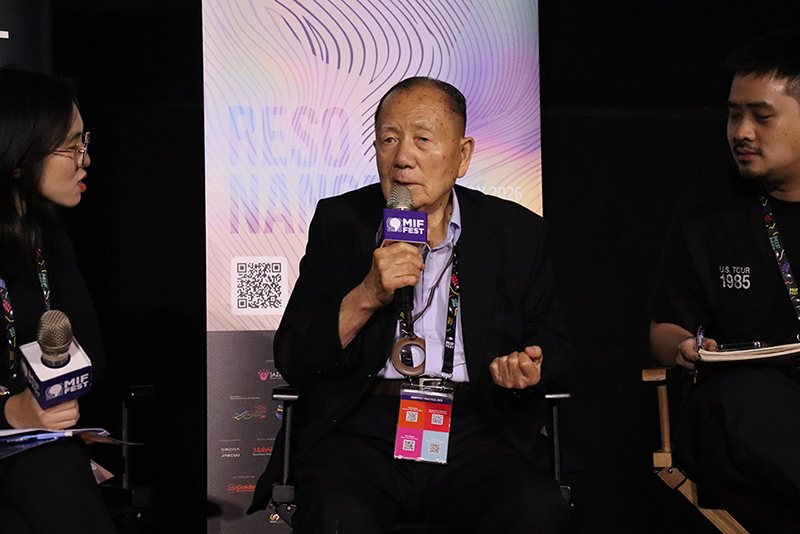
Kim Dong-ho, Honorary Festival Director of the Malaysia International Film Festival, during an interview following a screening of Mr. Kim Goes to the Cinema
Kim Dong-ho, Honorary Festival Director of the Malaysia International Film Festival, during an interview following a screening of Mr. Kim Goes to the Cinema
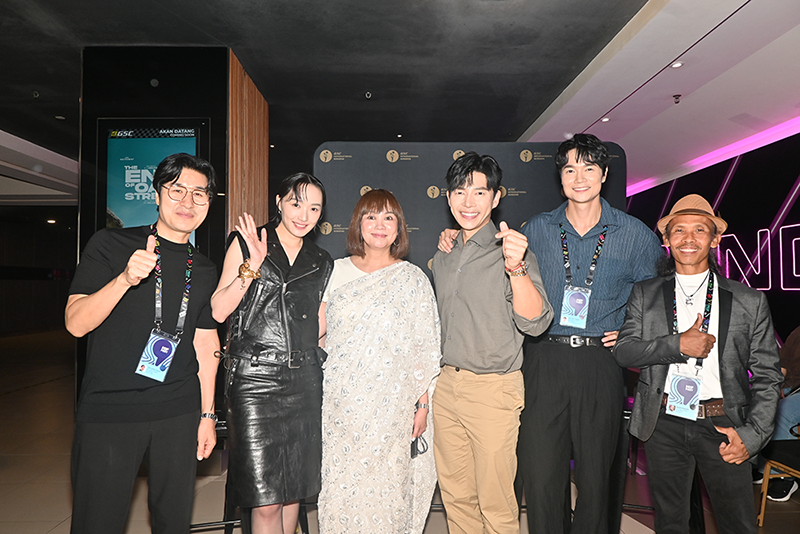
The cast and crew of Herring, including director Lee Sang-hoon (far left), Hong Kong actress Cecilia Choi (second from left), and actor Ji Seung-hyun (fourth from left)
The cast and crew of Herring, including director Lee Sang-hoon (far left), Hong Kong actress Cecilia Choi (second from left), and actor Ji Seung-hyun (fourth from left)
Toward an ASEAN Cinema Hub in Collaboration with Korea
Rather than relying on public funding from the government, the Malaysia International Film Festival is financed through sponsorship from a diverse range of companies. The festival has been sustained to this day largely through the determination of Festival Director Joanne Goh, who has demonstrated her entrepreneurial acumen in the entertainment industry by producing concerts and events. Goh is already developing a variety of ideas to mark the festival’s 10th anniversary next year. Her ultimate goal is to establish MIFFest as a hub for ASEAN cinema. To that end, the festival runs a range of subsidiary programs centered on the film and screen industries of the Association of Southeast Asian Nations (ASEAN). It has also received official recognition from ASEAN Records—the Southeast Asian equivalent of Guinness World Records—as the “first independently organized international film festival to simultaneously operate an annual film awards ceremony recognized by the ASEAN Secretariat and a year-round film curation program.” The recognition acknowledges the festival’s efforts to discover stories that embody the diverse cultures and identities of Southeast Asian cinema and to establish a sustainable hub where filmmakers from across the region can collaborate.
The festival’s “ASEAN On Screen” section reflects this vision, presenting six notable films from across the ASEAN region, including Bury Us in a Lone Desert (Vietnam, 2025), Dopamin (Indonesia, 2025), and Republic of Pipolipinas (Philippines, 2025). As part of its ASEAN-focused industry programming, the festival also hosted a panel discussion titled “Financing Film Today,” featuring prominent figures including acclaimed Filipino director Brillante Mendoza and Angga Dwimas Sasongko, producer of the hit Indonesian animated film Jumbo. Meanwhile, by showcasing Malaysian independent and commercial films across various sections, the festival gave international guests and audiences an opportunity to explore the current landscape of Malaysian cinema. In addition to the opening film BAGA: Tomorrow Belongs To No One, competition title The Waves Will Carry Us (2025), and ASEAN On Screen selection Tears in Kuala Lumpur, three new Malaysian films in the “Malaysian Dispatch” section—Finding Ramlee, Her Second Act, and Polong—offered a glimpse into the accessible storytelling of contemporary Malaysian cinema across genres ranging from comedy and drama to horror. Of particular note, Her Second Act is the debut feature written and directed by Joy Lee Choi Kin, a 2022 graduate of the Busan Asian Film School, making it a meaningful achievement for an emerging Asian filmmaker nurtured through Korea’s film industry.

The “ASEAN On Screen” panel explored Southeast Asia’s film investment landscape and MIFFest’s vision as a hub
for ASEAN cinema.
“The World of Lee Chang-dong” Captivates Malaysian Audiences
The Korean filmmaker who received particular attention at this year’s Malaysia International Film Festival was Lee Chang-dong. In addition to Q&A sessions following screenings of Peppermint Candy and Oasis, Lee took part in a masterclass and awards ceremony, as well as interviews with local media. The packed venues offered a clear indication of the interest and enthusiasm surrounding Lee’s cinematic world. Among those in attendance were young Malaysian filmmakers who had seen all six of Lee’s films, as well as numerous fans who brought English- and Chinese-language editions of his short story collections for him to sign. The festival also took place just after news broke that Lee’s new film Possible Love had been selected for the Competition at the Venice International Film Festival and the Special Presentations section of the Toronto International Film Festival, further heightening interest among local media and festival participants. Local journalists repeatedly asked Lee about the process of returning with a new film eight years after Burning, his thoughts on that return, what led him to work with Netflix, and his views on the changing film-viewing environment and the Korean film industry.
In interviews with the media, Lee said, “Even when I wasn’t shooting, I was constantly thinking about films and writing screenplays.” He continued, “I ask myself whether the film I am trying to make now is meaningful to me, whether it is meaningful to the audience, and whether it is meaningful as a film in itself. This is how I search within myself for the reason why I should make a particular film, and I cannot begin production until I am confident in my answers to all three questions.” Speaking about the theatrical release of Possible Love ahead of its Netflix release, he added, “I want to believe that the Korean film industry will improve, and I hope it does. The situation is still not particularly good, but many people are working hard in the hope that things will get better. Quite a lot of moviegoers went to theaters in the first half of this year, so I hope that momentum continues into the second half.”
Meanwhile, ASIA Records, the higher tier of ASEAN Records presented Lee Chang-dong with an official record certification award. The recognition commemorated Burning becoming the first film to receive—and setting a record with—a score of 3.8 out of 4 in Screen International’s official critics’ ratings when it competed at the 2018 Cannes Film Festival. In a press release published on its official website, ASIA Records described Burning’s achievement as “an unprecedented critical rating that remains unbroken as of 2026,” adding that it demonstrates “the ability of Asian cinema to engage international critics while addressing universal emotional and moral questions through storytelling rooted in specific social realities.” Explaining the significance of Lee’s visit, it also noted that “Lee Chang-dong’s visit to Malaysia provided an opportunity to reflect on the future of cinema at a time when streaming platforms and changing audience habits continue to shape the way films are experienced,” while also providing a detailed account of his masterclass. The diverse and passionate response to the world of Lee Chang-dong witnessed throughout the festival offered a fascinating glimpse into the achievements Korean cinema has made on the international stage.
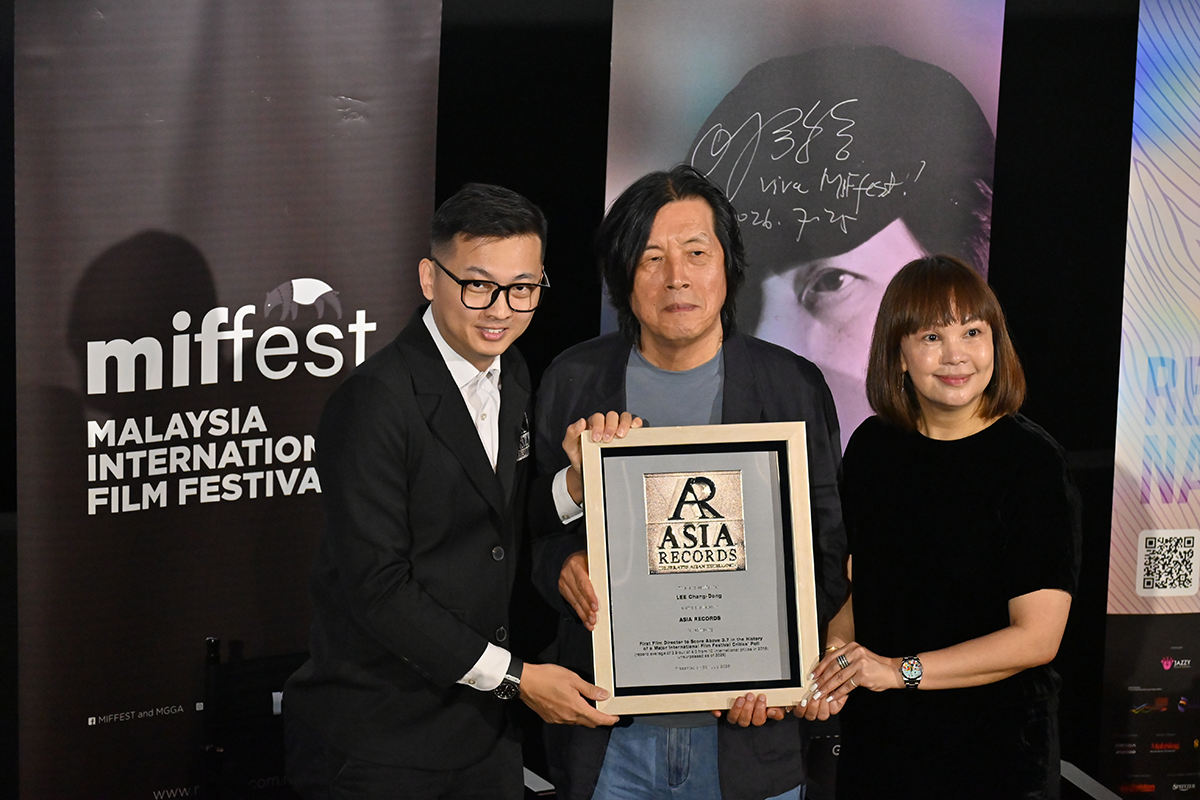
ASIA Records presented director Lee Chang-dong with
an award recognizing Burning for achieving the highest critics’ rating on record.
“I Hope the Questions in My Films Connect with the Reality Audiences Live In”
Highlights from Director Lee Chang-dong’s Masterclass
Moderated by Amir Muhammad, founder of Malaysian film production company Kuman Pictures, the masterclass unfolded in a lively atmosphere, with conversations ranging widely while offering considerable depth. It began with lighthearted questions about Lee Chang-dong’s personal tastes. In particular, Lee’s answers that he was rooting for the African nation of Cape Verde among the teams competing in the World Cup and that G-Dragon was his favorite K-pop artist helped ease the tension in the room, bringing him closer to the Malaysian audience and creating a warm, friendly atmosphere.
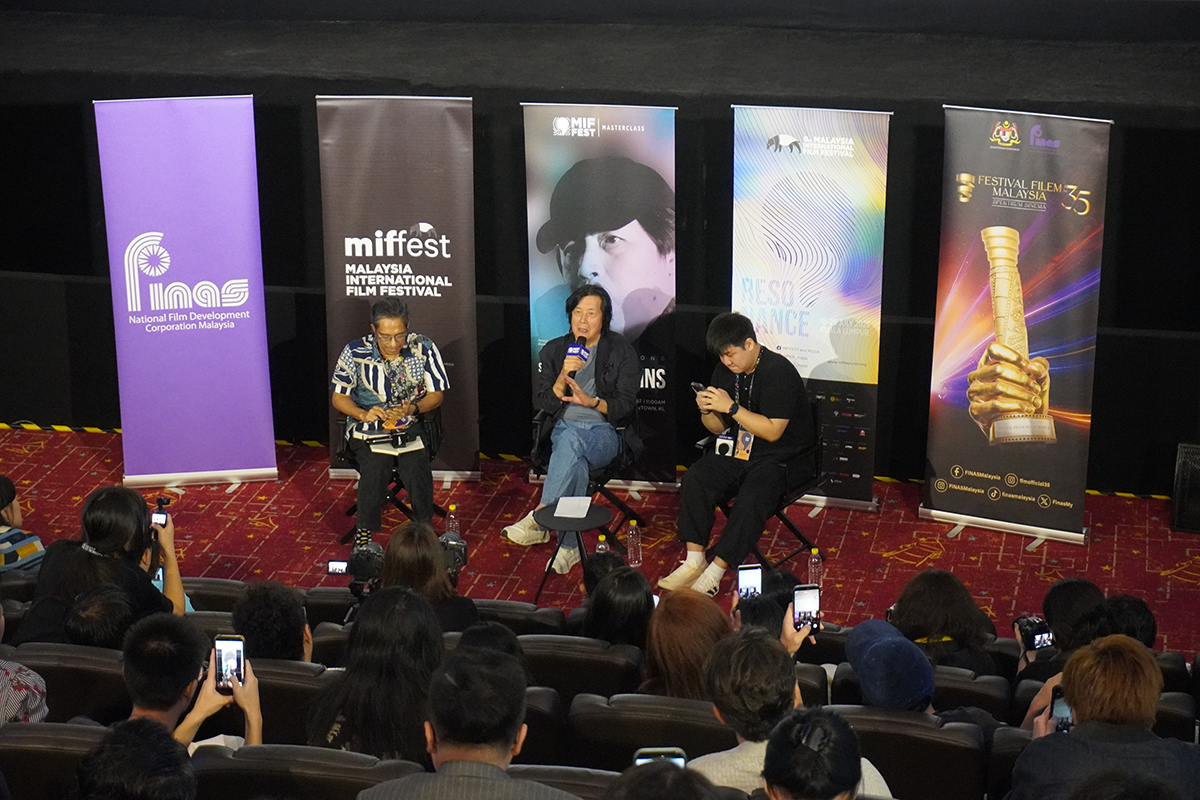
The masterclass drew considerable interest in
director Lee Chang-dong’s new film Possible Love.
Q Possible Love is known to have originated from one of the episodes of Krzysztof Kieślowski’s Dekalog (1989). How did the project come about?
Before Possible Love became a film, there was a project in which filmmakers from around the world would each take one episode from the Dekalog series and turn it into a feature-length theatrical film. I also began this film as part of that project. However, when Possible Love became a project with Netflix, the status of the original project became somewhat uncertain. Although the film originated from that idea, it is not an adaptation of an episode of Dekalog and tells a completely different story. It is, however, related to one of the Ten Commandments.
Q I read your short story collection Snowy Day and Other Stories, which was published in English last year. In the preface, you said that “writing fiction was a way of not turning away from reality.” Most people tend to think of fiction as a means of escaping reality, so I found this an unusual perspective.
I believe that cinema should fundamentally speak about reality and should not turn away from it. William Faulkner, the writer referenced in Burning, also said that literature is about saving the souls of those who suffer. I wrote with that belief in mind, and it remains unchanged now that I make films. I hope that after audiences watch my films, they connect with the reality of their own lives. I hope they search for answers in the real world to the questions I raise through my films. Of course, films like mine can make audiences uncomfortable. Even so, I believe there is a need for filmmakers who make films like mine.
Q We’re curious about your process of working with actors. Do you tend to rehearse extensively with them on set?
I don’t rehearse very much with actors. I believe that if actors rehearse too much, as they might when preparing for a play, their performances can become rigid. So I even ask them not to practice their lines at home. There are times when I listen to the actors and develop things together with them while writing the screenplay, but in most cases, once the screenplay is complete, I rarely change the dialogue. The camera movements in my films, however, tend to be quite complex, so I do a lot of camera rehearsals. Even then, I don’t rehearse with the actors themselves; I use stand-ins.
Q You reunited with actors Sul Kyung-gu and Jeon Do-yeon for Possible Love. Did you have them in mind when you wrote the screenplay?
Possible Love tells the story of two married couples: a laid-off worker and his wife, and a documentary filmmaker and her husband. I had actually been developing the story of the laid-off worker and his wife as a separate film several years ago and had nearly finished the screenplay before the project was put on hold. Sul Kyung-gu and Jeon Do-yeon had already been cast at the time, so we had been preparing the project together. Then, in 2022, I made a short film called Heartbeat, which also featured both actors. The original project had been suspended, but it was revived as Possible Love when the story of the documentary filmmaker and her husband was added. That is how Sul Kyung-gu and Jeon Do-yeon came to play the laid-off worker and his wife.
Q Do you have any role models as a writer or director? And if you were to recommend one poem by a Korean poet, which would you choose?
There is no one I would call a role model, but I can say that I have been influenced by many writers and directors. If I were to name one Korean writer, it would be Hwang Sok-yong. As a filmmaker, one director I admire and have been influenced by is Taiwan’s Hou Hsiao-hsien. Of his films, The Boys from Fengkuei (1983) is my favorite. When I first saw it, I felt as though I were watching a film I had made myself. As for Korean poetry, I would recommend Kim Soo-young’s Grass.
Q The Malaysian film industry faces strict censorship, and some scenes from Peppermint Candy and Oasis screened at this festival were also censored. It may be difficult for you to speak openly about the issue, but we would greatly appreciate hearing your thoughts on censorship.
I had been informed beforehand that Peppermint Candy and Oasis would be screened in censored versions, and I knew which scenes were considered problematic. Korea also had censorship. In particular, when I was writing fiction in the 1980s, the country was under an extremely repressive military regime, and censorship was severe. Talking about the massacre committed by the military regime in Gwangju was especially taboo. At the time, we had to find creative ways to circumvent censorship. I think that even when censorship exists, creators can sometimes become more creative as they search for ways to work around it.